.jpg)




“You have to get used to
the speed,” says Elbert
Ryhorchuk. “Flying a final
approach at 140 knots—
well, when you see it for
the first time, it’s pretty
amazing.” As Elbert
approaches the completion
of his first year as a
Metro II pilot with
Perimeter, he says the
speed factor was a big
part of his learning curve.
"In the end, though,” says
Elbert, “I found the aircraft
and the training com-
fortable—I had two to
three weeks where I could
just focus on the training,
and I had a lot of back seat
observation time where I
could learn what was expected of the First Officer.”
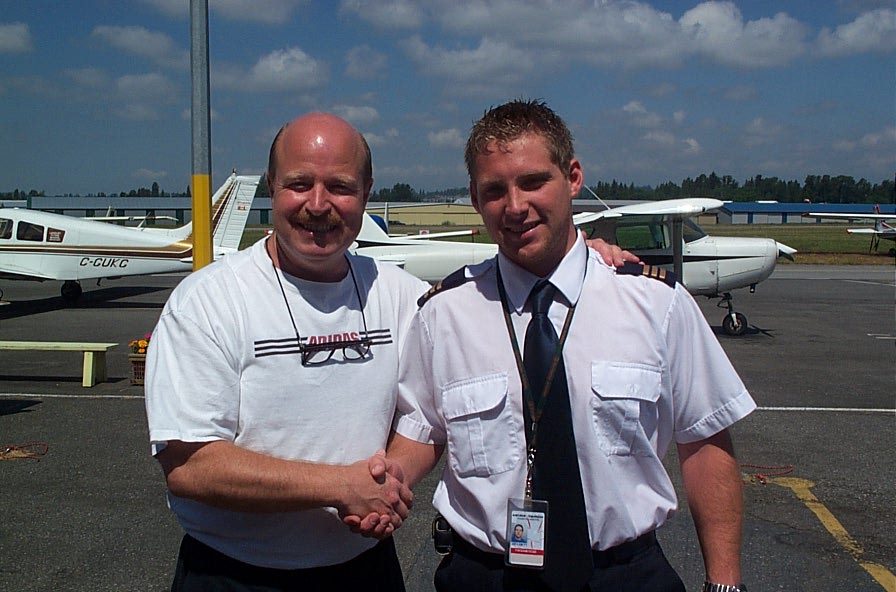
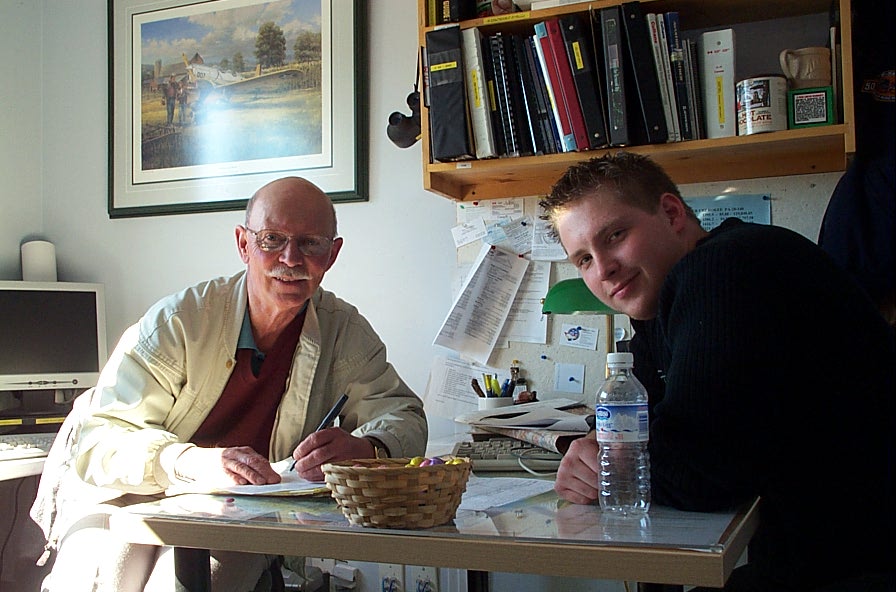
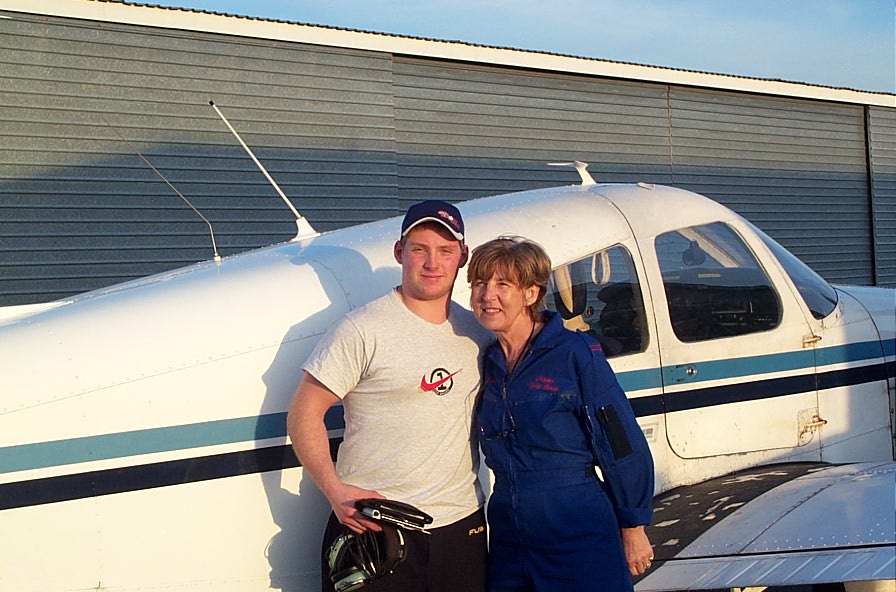
Elbert started flying with Langley Flying School back in January of 2004, and Rita Methorst was Elbert’s primary Flight Instructor right from his Private Pilot Licence, through his Commercial Pilot Licence, and finishing with his Group 1 (Multi-engine) Instrument Rating. Elbert completed both his Commercial Pilot Licence and his Instrument rating in September of 2005. Elbert ventured to Northern Ontario to pursue a lead on pilot employment shortly after graduation, but it was not until he did an interview with Perimeter for a ground position that opportunities began to present themselves. “The way it works with Perimeter,” say Elbert, “is that they will start 200-hour pilots, but those newly hired pilots have to initially work with the company in a ground-support position—it’s like from the ground up.” Prove your work ethic to the company, and they will move you to the right seat. “When I started, there was about fifty guys ahead of me,” say Elbert, “some were working on the ramp in Winnipeg and Thompson, some working in reservations, checking people in and working the call centre, and a few of us were working in the parts department of Perimeter’s maintenance division.” Initially, Elbert was told it would be about a year and a half before he would be piloting the turboprop Metro II, but he did not get the nod for nearly twenty-two months—“the hiring process became flooded at about that time,” says Elbert. “But the ground time was good preparation, especially in maintenance,” says Elbert. “We got to learn about the company and the aircraft systems—this made it easier when we started flying because we were familiar with the maintenance procedures.”
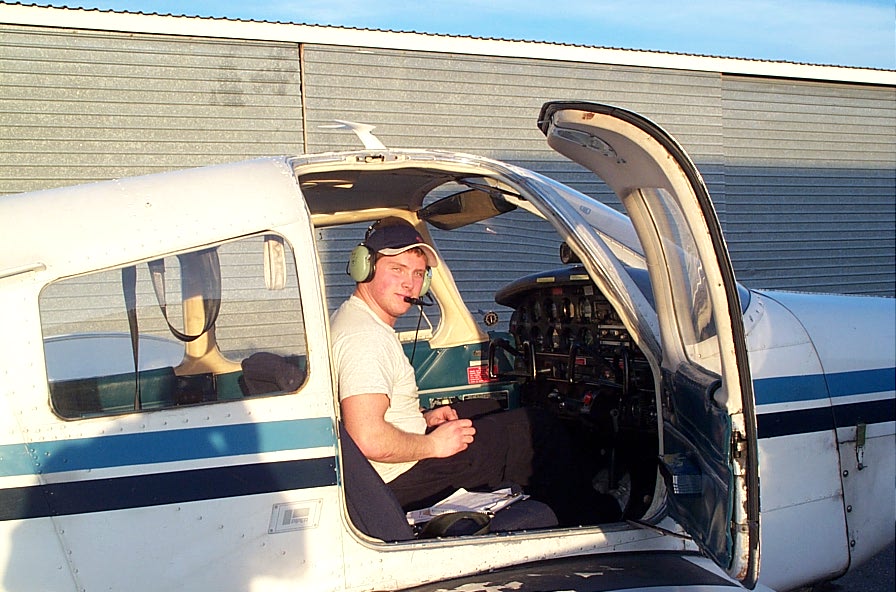
Flight training on the Metro started for Elbert in January, 2008. Incredibly, with just three training flights, Elbert successfully completed his Pilot Proficiency Check (PPC) and became operational as a First Officer. Because he had lots of time to observe flight deck procedures, and because he was the only First Officer in his class, Elbert was able to skip simulator training—when he moved to the right seat for his turn, he was well prepared for what was coming. “It was great—the training essentially followed the format for the flight test.”
On each of the training flights the crew would depart Winnipeg on an IFR flight to Red Lake; once outside the terminal control area, they would discontinue the Red Lake trip and reserve a block of airspace to practise the upper air exercises—steep turns, clean and dirty stalls, climbing turning stalls, and single-engine overshoots (practised at altitude). Then the return flight to Winnipeg, which typically included a RNAV GPS overlay instrument approach, and a vectored ILS. While the final approach speed for the Metro II is about 140 knots, the flight-planned cruise speed comes in at approximately 260 knots. “I certainly found that trim is a big thing with the Metro—you would really have to pay attention,” says Elbert in relation to the large speed variations characteristic of this aircraft. For the PPC ride, Elbert flew as the pilot-flying (PF), with his training captain performing the functions of the pilot-not-flying (PNF). “The key was telling the captain what to do as per the company’s Standard Operating Procedures,” say Elbert.
For the first five months of operational flying Elbert was assigned to the company’s scheduled routes serving northern Manitoba, most of which entailed day flights. After this, however, Elbert moved to Perimeter’s medivac operations. “You really had to focus and be ready,” say Elbert in relation to his medivac flying. “It is usually a more moderate pace when compared to scheduled flying, but you see a lot more adverse weather—a lot of flying down to minimums.”
What is Elbert’s advice to Commercial Pilot students? “Be prepared for a long road when you are getting started, but hopefully you will be lucky and start flying right away.” “Being flexible is the biggest thing—do your job the best you can, whatever you do—keep your options open—never get fixated on a single plan of action.”
Posted: December 30, 2008